Thursday, July 28, 2011

SECTION 12: Part 7 Ch 1-3 and Epilogue


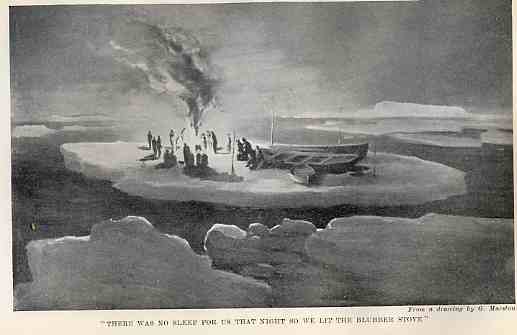
The rescue from Elephant Island

            In this final portion of the book, we are given details of how Shackleton, Worsely, and Crean made a journey across South Georgia to a whaling port, the others at South Georgia were saved, and a ship made a rescue mission and saved those on Elephant Island. The end is very fast, as readers are very intrigued and anxious to find how the novel will finally play out. Shackleton’s unfailing love for his crew finally paid off when in the end, every last person survived the voyage that had lasted years. Each person lived to tell their story of their expedition that had started on the Endurance, and taken them through thousands of miles of the Antarctic area. They had been brave, valiant, tough, cooperative, and altruistic through it all.
            In relation to real life, this feeling of the end of a long journey is hardly comparable to anything. One thing I can think that sort of compares is the story of the Chilean minors. They had been trapped with no hope for escape for days, but they never gave up wishing that they would be saved. Eventually, rescuers worked for weeks trying to devise a way to get each man up to safety. Food and water were brought down, and ultimately, things were done to be able to save them. Being finally reunited with their families must have been a celebration like no other. In a similar way, the crew of the Endurance must have felt so blessed to have survived what no one thought was survivable. Words don’t really describe what they probably felt when they saw their loved ones after their journey, it’s simply indescribable.
The literary term that is best presented in this last section is simple sentence. When Shackleton is brought face to face with the manager and is asked who he is, all he says is, “My name is Shackleton.” With this sentence everything is changed. People who thought they had died were shocked and Shackleton knew that he would finally be able to rescue his men. That very statement was one of the most important simple sentences in the entire novel.

Wednesday, July 27, 2011

SECTION 11: Part 6, Ch 1-6

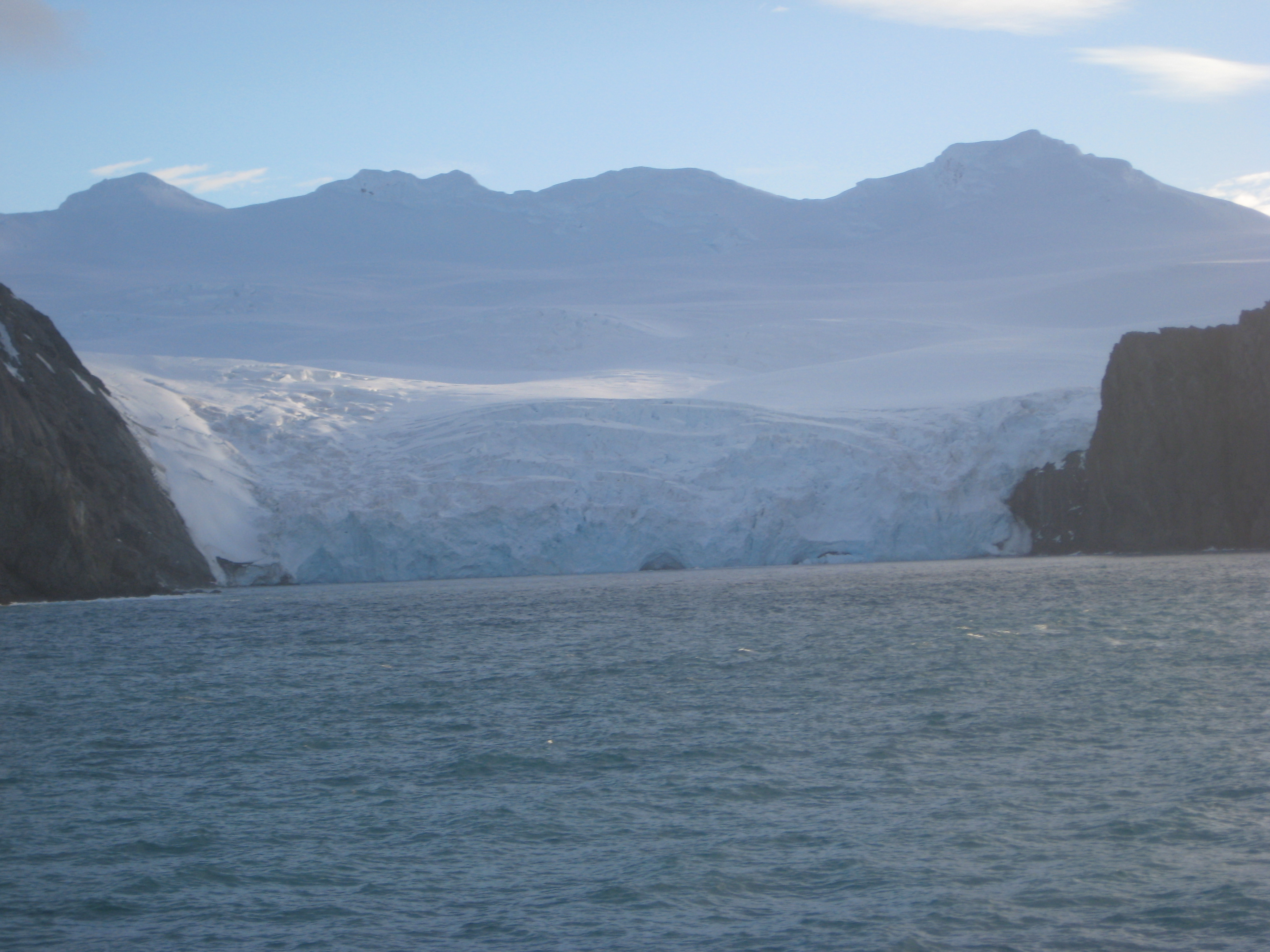
The goal island of South Georgia
            As the novel nears its end, we are given the viewpoint of those on the Caird during their journey to South Georgia. With chance not on their side, they work endlessly each hour of each day trying to beat the odds and survive. Nothing else even matters anymore, all they hope for is that soon they will wake up and their nightmare will end and they will see land. Heaving water, fighting off waves, chiseling ice, are the cycles they go through during the day. When they finally reach the halfway point, they know that they can’t give up because they’ve worked to hard to get where they are now. When they believe that at any moment, land might come into view, all the men watch in agony as hours pass with no luck. However, when land finally does come into view, all efforts are made to try and dock safely. After a few days of trying, they finally make it. All their effort, everything they had done to get to this point had finally paid off, they were going to make it.
This reminds me of the end of wars, the kind like World War I and II, the Civil War, the war our country fight to be a nation back in the 1700s. After years of fighting, death, and hate the end comes and people can celebrate and relax a bit. Sometimes people can just take a deep breath and finally think straight again. This is the same feeling the crew has; the end is so near, they can almost taste it. Lansing states, “Shackleton was sure the end was very near.”

A few graves of the fallen during WWII

The literary term I associated with this section was understatement. The crew on the Caird might think that, for the moment, reaching the island and surviving was all that mattered. They were ecstatic and jovial caught up in the moment. However, their emphasis is on surviving the trip, but in the back of every reader’s mind is the fact that now the others back on Elephant Island can be saved now, too. The entire book has taken a turn for the better. This reaching the island could potentially end what has been years of efforts, struggles, pains, and hard work, but the author focuses on the temporary thrill of the crew of 6 being saved, thus making this scene and understatement.

SECTION 10: Part 5, Ch 4-6

 
An example of frostbite and
gangrene, like Blackboro's condition
 As the fifth part continues, the crew that was marooned on the island have faced many struggles in the past several months. From another bitter winter to Macklin and McIllroy having to perform surgery on Blackboro’s foot, the entire crew is becoming more and more discouraged with each day that passes without rescue. Hudson even has to have an abscess drained because it had become so large. Wild tries desperately to keep the morale up within the crew, but it seems to remain hopeless. Although they don’t say much about the possibility of the Caird being lost, it is almost unanimously accepted that it won’t be returning. 
In comparison to today, I feel this best describes some teams in sports. If my team hadn’t won a game all season, and had lost every game by a large margin, it would be difficult for any coach to try and keep our spirits up. Sometimes only a miracle can raise hopes and dreams that have so repeatedly been crushed.
The literary term I feel was best discussed was irony. The whole novel is almost ironic since the name of their original ship was Endurance and they have endured unimaginable things thus far. But I feel the best example of this is when Hurley wrote in his diary, “‘ Life here without a hut or equipment is almost beyond endurance.’”

SECTION 9: Part 5, Ch. 1-3


Shackleton and five crew members ready
 to board the Caird and go to South Georgia

Having finally reached Elephant Island, the men rejoiced and celebrated a new chance and hope for survival. Setting up camp, eating a hearty meal, and sleeping like they hadn’t in years were only a few of the tasks the men did on their fist day on the island. Unfortunately their celebrating was short-lived, since, in the next few days, they had to search for a more livable area to camp on for the time being. After finding a suitable place, Shackleton had to make a difficult decision to send himself and a crew of five men on the Caird to go to South Georgia in the hopes of finding relief and safety finally. With the winds on their side, they soon make preparations and head off.
Almost any person can imagine a time when they set off to do something, but were unsure about the future and what it would bring. Saying goodbye to people that we care deeply about, and yet in the back of our minds, we wonder that could be the last time we ever say those words. When a teenager goes off to college, when a soldier goes off to war, when a family is moved to another state because of a job, these are all times when a “goodbye” is a little more than just any other “goodbye”. They are more tentative and uncertain, and this is exactly what the crew was feeling when they said their farewells to their fellow men heading out to South Georgia.
I feel the literary term that best fits in this section would be tone. After the crew has realized their reality, they become more gloomy than usual. The possibility of being split up for good hangs over their heads and disheartens them a little bit. Lansing’s tone of finality is a good supplement to help readers understand just how different the attitudes of the crew will be now. Lansing describes it well as he says, “But the tension in the air was unmistakable. Both groups knew they might never see one another again.”

Monday, July 25, 2011

Endurance, SECTION 8: Part 4, Ch. 3-5


Elephant Island

            As Part IV of this book continues, the crew finds that they are now hungrier, colder, and weaker than ever before. Now having braved the chilling waters for several days without rest, they were tremendously disheartened at hearing the news that Worsley had miscalculated where they were. If they were to have any chance at survival, they would need to change their destination to Elephant Island, and get there as quick as possible. Lack of sleep and frostbite also started to kick in, making the journey even more treacherous, and Shackleton seriously doesn’t know how much more whole crew can take. They were so parched from days without water that they couldn’t even swallow food, making them famished as well. Relating to this kind of thirst is simply unimaginable. In the course of one of my basketball games or practices, I can sometimes drink up to 3 water bottles. I have no idea how I would be able to survive days without it; it would be nearly impossible for me. Why Water Is Important
Finally after many days of searching for Elephant Island, and getting closer and farther over and over again, all three ships eventually make it. For the first time in 497 days, they had finally made it to land, all their hard work paying off at last.
The literary term that best fits in this segment of the book would be turning point. Now that they have reached land, they have a real chance of survival. Their luck has changed and the end is finally in sight for the men.

Endurance, SECTION 7: Part 4, Ch 1-2


A piece of ice, just big enough to camp on for the
 night, but not sturdy enough to sleep
 without worry of the ice cracking

            In this portion of the book, the Shackleton and his team leave Patience Island and head out in three handcrafted boats: the James Caird, the Dudley Docker, and the Stancomb Wills. They embark on yet another journey hoping to reach land before winter falls once again. Using teamwork at its finest, the crew manages to row many miles in just a few days with hardly any rest and just enough food to get by. The quandaries have not ceased yet though, since finding and setting up places to sleep is one of the riskiest of all the tasks they withstand. But the crew finds a way to succeed every time, never letting fear hinder the clear motive of surviving yet another Antarctic night.
It relates to me in that its almost like studying for a vocab test. I can cram study the ten words that will be on tomorrow’s test and have them memorized and then forgotten the next day, or I can study all of my accumulative words a little bit each day, and prepare myself for the final and the test Friday. In the long run, the second plan will benefit me the most, though it might be harder to motivate myself to study every day.
Their goal was to reach this island; it was their
best bet for rescue
I feel that motivation is the best literary term to use in this section. Shackleton changed his mind about going to the nearest land, and instead, made their destination to King Geoge Island. Lansing made his motivation for this unexpected change of mind clear, “Here the remains of a volcano’s cone …was a frequent port of call for whalers. Too, there was thought to be a cache of food at Deception Island…But most important, there was a small, rude chapel there…they could use tear down the church and use its lumber to build a boat large enough to accommodate all of them.” Shackleton took risk in choosing this to be their goal, but he knew that it would ultimately be their best bet at getting out of their situation the quickest. 

Sunday, July 24, 2011

Endurance, SECTION 6, Part 3, Ch 4-6

            This sixth segment of the book was actually one of the more eventful sections in Endurance. From watching day and night for the next destination, to the food scare, the events in this part of the novel proved a true test for Shackleton and his men. Plagued with one predicament after another, the team faced extreme hunger, a fear of dying due to cracked ice, and dangerous sea leopards to name a few.
            Their future seemed to look bright for a while when their food supply was replenished with sea leopard and they spotted an island not too far from them. However, the good fortune was short-lived as the next few days included having to leave their camp because of a huge split in the ice. With the continuous strain of dilemma after dilemma, I am reminded of our country earlier in the year when the tornado season approached and many cities were destroyed by the powerful winds. Many of the nation’s states were terribly affected by the tornadoes, leaving many without homes, jobs, or anywhere else to go. Nonetheless, these tragedies brought together communities; with people helping to rebuild, not only homes and buildings, but also lives, the disasters didn’t break the community, they only strengthened it. Likewise, the crew of the Endurance didn’t sever the team, but revived it again with the hope of survival.

Macklin with two of his dogs

The literary term I chose for this portion of the book is symbol. The symbol I chose to point out was the dogs. Until they were killed and used as food, they symbolized some sort of tie to civilization: something that the crew could attach themselves to and love. Lansing states, “Macklin was almost sick as he unharnessed one dog at a time and took it around the protective mound of ice.” This shows that even though they knew their duty, they still found it difficult to destroy one of the few things that still gave them joy.